
PRP in Knee Osteoarthritis
- PRP in Knee Osteoarthritis
- At Which Stage and for Whom is PRP Applied in Knee Osteoarthritis?
- What is PRP and Why Do We Use It for the Knee Joint?
- Stages of Knee Osteoarthritis: At Which Stage is PRP Effective?
- Who Should Not Receive PRP?
- How is PRP Administered?
- How Many Sessions of PRP are Applied?
- Conclusion: PRP is an Effective Treatment When Used Wisely
At Which Stage and for Whom is PRP Applied in Knee Osteoarthritis?
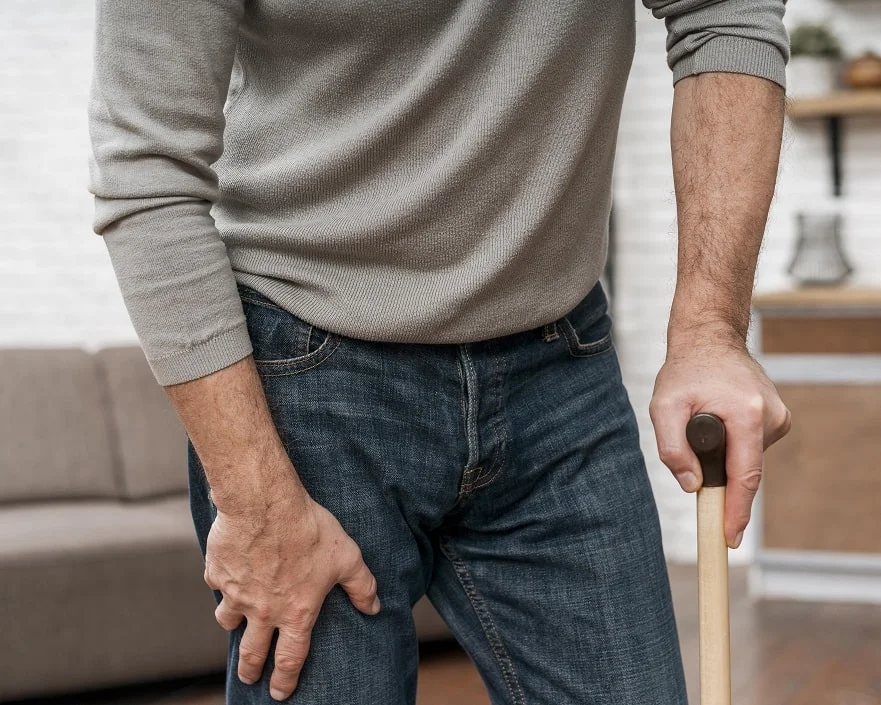
Knee osteoarthritis (gonarthrosis) is a chronic condition that significantly affects quality of life, resulting from gradual wear of the joint cartilage, qualitative deterioration of synovial fluid, and inflammatory reactions of the periarticular tissues. The most common complaints we hear from our patients are difficulty climbing stairs, pain during long walks, morning stiffness, and significant limitations in daily activities.
Among current treatment options, PRP (Platelet-Rich Plasma) has become one of the frequently preferred biological treatments in recent years due to both its safety and its natural composition. However, PRP is not suitable for every patient, at every stage, or in every situation. Therefore, we assess our patients holistically and individualize treatment according to the clinical picture.
In this article, we aim to explain in detail at which stage of knee osteoarthritis, for which patient groups, and with what expectations PRP can be applied.
What is PRP and Why Do We Use It for the Knee Joint?
PRP is a biological treatment obtained by processing a patient’s own blood to concentrate the platelets it contains. Platelets are the body’s natural repair cells and are extremely rich in growth factors and bioactive substances that trigger healing.
The goals of PRP applications are:
- To activate micro-healing processes in the knee joint,
- To support cartilage structure,
- To improve the quality of synovial fluid,
- To reduce pain and inflammatory response,
- To enhance functional capacity.
In this sense, PRP is especially effective as a complementary treatment in early and moderate-stage osteoarthritis.
Stages of Knee Osteoarthritis: At Which Stage is PRP Effective?
For staging osteoarthritis, we most commonly use the Kellgren-Lawrence classification, which ranges from 0 to 4:
Stage 1 – Very Early Stage
- Minimal osteoarthritis is visible on X-ray.
- Mild joint stiffness and occasional pain may occur.
PRP is highly effective at this stage. The biological capacity of the joint is still high; the growth factors in PRP more effectively support tissue regeneration. Patients in this stage generally experience the highest benefit.
Stage 2 – Early Stage
- Mild narrowing of the joint space may be seen.
- Cartilage degeneration has begun.
- Pain with walking is more pronounced.
This is one of the ideal stages for PRP. At this stage, PRP can reduce pain and improve mobility. In many patients, meaningful benefit is observed for 6–12 months.
Stage 3 – Moderate Stage
- Cartilage loss is more evident.
- Joint space is significantly narrowed.
- Pain during activities such as climbing stairs or squatting may be severe.
- Swelling and stiffness often accompany the symptoms.
PRP can be applied at this stage, but expectations must be set correctly:
- It does not restore cartilage to its original state.
- The goal is to reduce pain, improve synovial fluid quality, and slow disease progression.
- Typically, 2–3 session protocols are preferred.
We often observe better outcomes in patients where PRP is combined with hyaluronic acid (viscosupplementation) at this stage.
Stage 4 – Advanced Stage
- Severe degeneration with bone-on-bone contact is present.
- Movements are significantly restricted; pain is severe.
- X-ray shows near-complete closure of the joint space.
At this stage, PRP alone is often insufficient:
- It does not provide permanent improvement.
- If pain is extreme, joint replacement surgery may be considered.
- In some patients, PRP may provide short-term (2–3 months) pain control, but this is temporary.
Therefore, the most suitable stages for PRP are:
➤ Stage 1
➤ Stage 2
➤ Stage 3 (selected patients only)
Who Should Not Receive PRP?
Although PRP is a safe treatment, we do not recommend it in certain situations:
- Patients with bleeding disorders
- Advanced-stage (Stage 4) osteoarthritis and candidates for joint replacement
- Active infection at the injection site
- Active rheumatologic flare
- Severe anemia or low platelet count
- Undergoing chemotherapy
- Immunodeficiency
We always evaluate patients individually to determine whether the treatment is safe.
How is PRP Administered?
In our clinics, PRP application is performed in the following steps:
- Blood is drawn from the patient’s vein.
- The blood is processed through a special centrifuge.
- Platelet-rich plasma is separated.
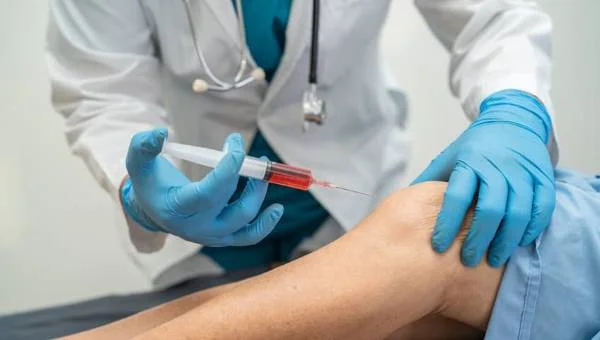
- It is injected into the knee joint under ultrasound guidance, in sterile conditions, using a single-use needle.
- The procedure takes a total of 15–20 minutes.
After PRP, mild pain may occur for a few days; we advise patients not to overload the joint during this period.
How Many Sessions of PRP are Applied?
General clinical protocols:
- Stage 1–2: 1–2 sessions
- Stage 3: 2–3 sessions
The interval between sessions is generally 2–4 weeks. In some patients, a single “booster” PRP session per year can help achieve long-term results.
Conclusion: PRP is an Effective Treatment When Used Wisely
PRP is a valuable option among biological treatments for knee osteoarthritis; however, it is not suitable for every patient at every stage. PRP can be applied up to approximately 65–70 years of age. Beyond 70, due to insufficient cartilage, we generally do not recommend it.
When applied to the right patient at the right stage, we frequently observe that PRP:
- Significantly reduces pain,
- Improves joint function,
- Increases walking and stair-climbing capacity,
- Enhances quality of daily life.
With correct evaluation, timing, and an individualized treatment plan, PRP holds a strong place as a conservative treatment option in knee osteoarthritis.
Dr. Elif Berber, MD, PhD
Physical Medicine and Rehabilitation Specialist