
The Role Of Avocado In Health
- The Role Of Avocado In Health
- Why is avocado important?
- Avocado and Bone Health
- A Supportive Role in Bone Marrow Edema and Inflammatory Processes
- Contributions to Muscles, the Nervous System, and Functional Movement
- Avocado in the Longevity Approach
- How Should Avocado Be Consumed?
- Conclusion
Today, our approach to nutrition is no longer limited to weight control or meeting daily energy requirements. We now give much greater consideration to the effects of foods on the musculoskeletal system, metabolic balance, inflammation control, cellular aging, and overall quality of life. From this perspective, avocado stands out not merely as a popular fruit, but as a valuable food that can support many aspects of health thanks to its versatile nutritional composition.
As a physician specializing in Physical Therapy and Rehabilitation, I believe it is important to approach my patients not only in terms of exercise, posture, joint health, or pain management, but also in terms of lifestyle factors that enhance the body’s capacity for recovery. Tissue repair, control of inflammation, maintenance of bone health, and preservation of muscle function are not independent of proper nutrition. Within this holistic framework, avocado occupies a particularly noteworthy place.
Why is avocado important?
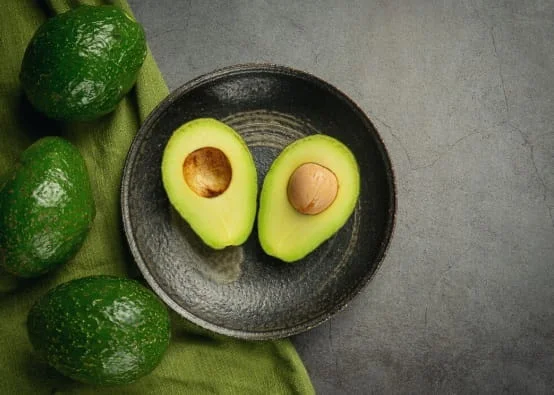
Unlike most other fruits, avocado contains a high proportion of monounsaturated fatty acids. In addition, it is rich in a variety of vitamins and minerals.
Its primary components include:
• Vitamin K
• Folate (Vitamin B9)
• Potassium
• Vitamin E
• Vitamin C
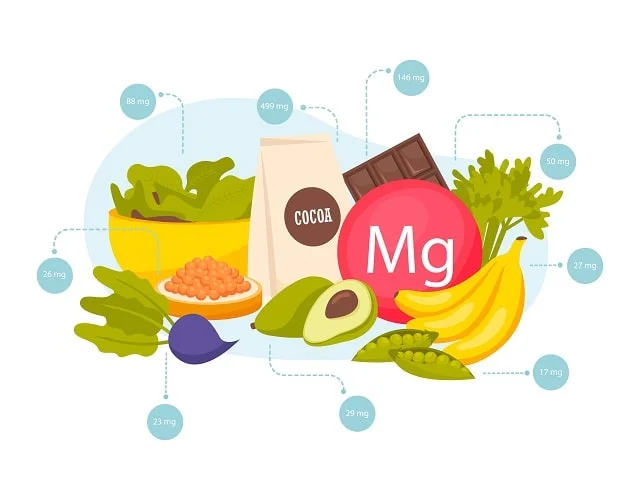
• Magnesium
• Fiber
• Healthy fats such as oleic acid
The monounsaturated fatty acids it contains help reduce the inflammatory burden in the body. This is important in terms of chronic pain, joint stiffness, limitations in movement, and tissue healing processes.
For individuals experiencing musculoskeletal problems, it is necessary to strengthen not only the management of symptoms but also the biological environment of recovery. When an appropriate exercise program, adequate sleep, stress management, and balanced nutrition come together, treatment outcomes become more successful. Avocado therefore becomes a functional component of this supportive nutritional model.
Avocado and Bone Health
When bone health is discussed in society, calcium is often the only nutrient that comes to mind. However, bone metabolism is a far more complex process. In addition to calcium, components such as magnesium, vitamin D, protein balance, and particularly vitamin K also play roles in the balance between bone formation and bone resorption.
Vitamin K contributes to the activation of certain proteins involved in bone tissue. For this reason, it is important for maintaining bone quality. Thanks to its vitamin K content, avocado is among the foods that may be considered in nutritional models aimed at preserving bone integrity, especially in later life. Of course, it is not a miraculous solution on its own; however, within a regular, balanced, and diverse dietary plan, it can offer meaningful support.
The potential contributions of avocado to bone health can be summarized as follows:
• It may support bone mineral density
• It may help reduce the risk of bone loss
• It can be included in nutritional programs aimed at preventing osteoporosis
• It may contribute to dietary strategies that support bone healing after fractures
In addition, during the postmenopausal period, and in individuals at risk of osteopenia or osteoporosis, not only medication but also daily dietary habits constitute an important part of the treatment plan. At this point, the richness of avocado in healthy fats and micronutrients may contribute to a bone-friendly nutritional pattern.
A Supportive Role in Bone Marrow Edema and Inflammatory Processes
Bone marrow edema is a condition we frequently encounter in clinical practice and is often associated with pain, sensitivity during weight-bearing, and loss of function. It may occur following trauma, excessive loading, stress fractures, degenerative processes, or intra-articular pathologies. The fundamental approach here involves accurate diagnosis, load regulation, a structured rehabilitation plan, and treatment directed at the underlying cause.
Nutrition is not a method that directly replaces the treatment of bone marrow edema; however, it is an auxiliary factor that supports the biological environment of recovery. The healthy fats, antioxidant vitamins, and mineral components contained in avocado may contribute to the body’s ability to cope with inflammation. In particular, reducing chronic low-grade inflammation is important for supporting tissue repair processes.
For this reason, when recommending a nutritional plan for individuals experiencing bone marrow edema—one that is low in processed foods and rich in vegetables, fruits, healthy fats, and adequate protein—avocado may be included as an appropriate option within this dietary framework.
Contributions to Muscles, the Nervous System, and Functional Movement
Avocado is also noteworthy for its potassium content. Potassium is an important mineral for muscle contraction, nerve transmission, and fluid–electrolyte balance. In physical therapy practice, nutritional deficiencies must always be considered in individuals who experience muscle cramps, fatigue, reduced exercise tolerance, or a general decline in performance.
Particularly for individuals who exercise regularly, are undergoing rehabilitation, or are attempting to preserve muscle mass due to aging, choosing foods with high functional nutritional value rather than energy-dense but nutrient-poor options is more appropriate. In this respect, avocado represents a satisfying and metabolically balanced alternative.
Avocado in the Longevity Approach
In recent years, one of the concepts frequently discussed in medical and healthy lifestyle literature is Longevity, meaning the pursuit of healthy long life. The goal here is not merely to extend lifespan but to maintain independence in movement at advanced ages, preserve cognitive functions, support muscle and bone structure, keep inflammation low, and sustain quality of life.
From this perspective, avocado finds a strong place in longevity-oriented nutritional models. This is due to its favorable structure for blood sugar balance, its healthy fat content, its richness in fiber, and its provision of micronutrients. In the process of healthy aging, not only the cardiovascular system but also joints, muscles, connective tissues, and bones must be protected. Avocado is one of the foods compatible with this holistic health approach.
How Should Avocado Be Consumed?
As with any healthy food, balance is important when consuming avocado. Although it has high nutritional value, its energy content should also be considered. Therefore, it is appropriate to consume it with portion control. It can be incorporated into breakfasts with whole-grain bread, added to salads, mixed with yogurt preparations, or consumed as part of healthy snacks.
However, the key point is not to search for a single “superfood,” but rather to improve the overall dietary pattern. Avocado gains its true value when combined with adequate protein intake, vegetable-rich meals, regular exercise, quality sleep, and stress management.
Conclusion
Avocado is a valuable food that supports general health thanks to its content of healthy fats, fiber, potassium, and particularly vitamin K. It can be an important supportive element for bone health and may contribute to inflammation control, becoming a supportive nutritional component in conditions requiring recovery, such as bone marrow edema. In addition, it holds a notable place within the framework of healthy aging and the longevity approach.
From the perspective of a Physical Therapy and Rehabilitation specialist, preserving the musculoskeletal system is possible not only through exercise but also through proper nutrition. When consumed consciously and in balance, avocado represents a highly valuable option within this holistic approach.

Dr. Elif Berber, Assist. Prof.
Specialist in Physical Therapy and Rehabilitation