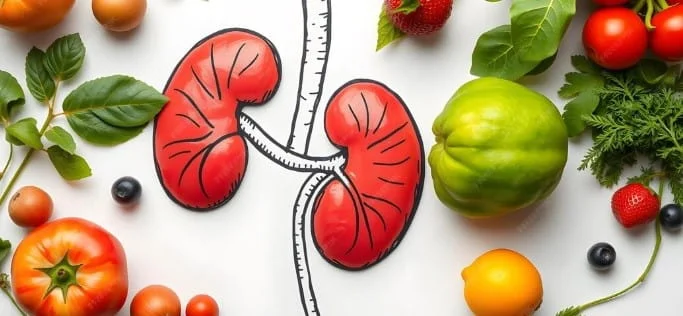
Nutrition in Kidney Diseases
- Nutrition in Kidney Diseases
- Basic Principles of Nutrition in Kidney Diseases
- Nutritional Strategy in Chronic Kidney Disease
- Nutrition in Dialysis Patients
- Nutrition in Kidney Stones (Nephrolithiasis)
- Common Nutritional Mistakes
- In Conclusion
As dietitians, we know that nutrition in kidney diseases is not only supportive but also an integral part of treatment. The kidneys perform vital functions such as maintaining fluid-electrolyte balance, removing waste products, and preserving metabolic equilibrium. Therefore, any impairment in kidney function requires the nutrition plan to be carefully structured.
In this article, we will discuss in detail how nutrition should be regulated within a broad framework, from chronic kidney disease to kidney stones.
Basic Principles of Nutrition in Kidney Diseases
In our approach, since each individual’s clinical condition is different, nutritional therapy is planned on an individualized basis. However, there are general principles:
a) Protein Balance
Protein intake in kidney patients must be carefully adjusted.
• In early stages: Controlled protein (to avoid excessive burden)
• In advanced stages: More restricted protein
• In dialysis patients: Increased protein requirement
Our goal here is to ensure adequate but not excessive protein intake. For this, we aim to balance high biological value protein sources such as eggs, milk, and yogurt with plant-based proteins.
b) Sodium (Salt) Control
Sodium restriction is of critical importance in kidney patients. We generally recommend 2–2.3 grams of sodium per day. Excess salt leads to edema. Edema, in turn, triggers hypertension and increases the burden on the kidneys. To prevent these, we teach our patients “cooking and seasoning techniques without adding salt.” We also provide guidance on foods that should be avoided. Let us recall the foods to avoid:
• Processed foods
• Pickled products
• Ready-made sauces
c) Potassium Management
Potassium levels vary depending on the stage of the disease. High potassium can lead to cardiac rhythm disorders, while low potassium may cause muscle weakness. In kidney diseases, potassium balance is disrupted. Therefore, we develop recommendations to control potassium balance in kidney patients.
Foods that should primarily be avoided include bananas, potatoes, tomatoes, and dried fruits.
However, it is important to emphasize that potassium restriction is not applied in the same way to everyone.
d) Phosphorus Control
Phosphorus accumulation negatively affects bone health. In kidney diseases, as with potassium, phosphorus balance is also disrupted. Therefore, individuals with kidney disease should avoid carbonated beverages, processed meats, and packaged foods.
We particularly draw attention to additives containing “hidden phosphorus.”
e) Fluid Balance
Fluid intake is regulated according to the patient’s urine output. Excess fluid increases edema and cardiac workload, while insufficient fluid leads to the accumulation of waste products (toxins). At this point, I would like to emphasize that fluid monitoring should generally be planned individually.
Nutritional Strategy in Chronic Kidney Disease
In chronic kidney disease (CKD), our main goals are:
• To slow disease progression
• To reduce symptoms
• To improve quality of life
In this process:
• We ensure adequate energy intake
• We try to prevent catabolism
• We continuously monitor electrolyte balance
The most critical point for us here is this: to establish a delicate balance between undernutrition and overloading.
Nutrition in Dialysis Patients
During the dialysis process, protein and energy requirements increase. In our nutritional approach, while meeting these needs, we must also consider fluid restriction and the control of phosphorus and potassium.
In dialysis patients, we particularly aim to maintain this balance: preventing malnutrition while not increasing metabolic burden.

Nutrition in Kidney Stones (Nephrolithiasis)
Kidney stones are an important health problem directly related to nutrition. At this point, we develop an approach according to the type of stone.
a) Calcium Oxalate Stones: The most common type. We encourage adequate water intake (2–2.5 liters per day). We limit foods rich in oxalate such as spinach, chocolate, and tea. We do not completely eliminate calcium, as this would be a significant mistake.
b) Uric Acid Stones: Since they are a byproduct of protein metabolism, we limit purine-rich foods such as red meat and organ meats. We create dietary plans that shift urine from acidic to alkaline.
c) Our General Approach to Preventing Stone Formation: For this, we recommend the following basic principles:
• High water intake (the most important factor)
• Avoiding excessive salt
• Balanced protein consumption
• Reducing sugary and processed foods
Common Nutritional Mistakes
As dietitians, we most frequently encounter the following mistakes:
• Completely eliminating protein
• Restricting water excessively or consuming it in excess
• Assuming plant-based products are unlimited
• Using supplements unconsciously under the label of “natural”
Therefore, we always emphasize this: nutrition in kidney diseases must be monitored professionally.
In Conclusion
As dietitians, we underline that nutrition in kidney diseases is a powerful tool that directly affects the course of the disease. A properly planned nutrition program can:
• Preserve kidney functions
• Reduce complications
• Significantly improve the patient’s quality of life
However, the most critical point here is this: the same diet cannot be applied to every patient.
For this reason, we base our approach on individualized nutrition plans and monitor our patients regularly.
We wish you all healthy days…

Specialist Dietitian Elisa Atasoy
Dietitian and Nutrition Expert