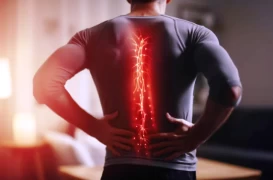

The Role of the Quadratus Lumborum Muscle in Low Back Pain
- The Role of the Quadratus Lumborum Muscle in Low Back Pain
- Anatomical and Functional Importance of the Quadratus Lumborum Muscle
- The Relationship Between Low Back Pain and the Quadratus Lumborum
- How Does Quadratus Lumborum Muscle Dysfunction Lead to Low Back Pain?
- Evaluation Process
- Treatment Approaches
- Preventive Approach: Is It Possible to Prevent Low Back Pain?
- Conclusion
Low back pain is a common health problem seen across all age groups today and significantly affects quality of life. In our clinical experience, we observe that low back pain is not attributable to a single cause; rather, it is most often a multifactorial condition related to the musculoskeletal system, postural habits, and daily mechanical loads. In this process, one of the muscles that is frequently overlooked yet plays a critical role in lumbar stability and movement control is the quadratus lumborum (QL) muscle. As Physical Therapy and Rehabilitation specialists, we always take into account the anatomical and functional characteristics of the quadratus lumborum muscle when evaluating low back pain.
Anatomical and Functional Importance of the Quadratus Lumborum Muscle
The quadratus lumborum muscle is a deep muscle group located between the pelvis and the lumbar spine. It originates from the iliac crest and extends to the lower thoracic and upper lumbar vertebrae. Owing to this position, it plays an important role in both lateral spinal stability and the control of trunk movements.
The primary functions of this muscle are as follows:
- Enabling lateral flexion of the trunk
- Contributing to stabilization of the lumbar spine
- Assisting in maintaining pelvic balance
- Supporting trunk–pelvis coordination during walking
In our clinical practice, we observe that healthy functioning of the quadratus lumborum muscle balances load distribution in the lumbar region and reduces excessive stress on the spine.
The Relationship Between Low Back Pain and the Quadratus Lumborum
In individuals with low back pain, the quadratus lumborum muscle is often either excessively tense or functionally weak. Dysfunction of this muscle can be both a cause and a consequence of low back pain.
Situations we frequently encounter in clinical observations include:
- Asymmetric tension of the QL muscle in individuals who carry unilateral loads for prolonged periods
- Muscle spasms related to incorrect sitting and standing habits
- Compensatory overactivity of the QL muscle in cases of leg length discrepancy or pelvic imbalance
Over time, these conditions may lead to the development of trigger points within the muscle, localized tenderness, and low back pain that increases with movement.
How Does Quadratus Lumborum Muscle Dysfunction Lead to Low Back Pain?
The contribution of the quadratus lumborum muscle to low back pain occurs through several mechanisms:
- Muscle Tension and Spasm
Prolonged sitting, sudden movements, or heavy lifting may lead to protective spasm in the QL muscle. This spasm causes deep and diffuse pain in the lumbar region. - Pelvic Imbalance
Unilateral shortening of the muscle may result in pelvic elevation, disrupting spinal alignment. This creates uneven loading on the lumbar vertebrae and intervertebral discs. - Loss of Stabilization
A weakened quadratus lumborum muscle reduces lateral stability of the lumbar spine. In such cases, we observe that other muscles in the lumbar region become overactive and pain tends to become chronic. - Referred Pain
Trigger points within the quadratus lumborum muscle may cause referred pain to the hip, groin, and even the thigh. This can lead to misinterpretation of the true source of low back pain.

Evaluation Process
When evaluating our patients, we approach the quadratus lumborum muscle from a holistic perspective. The following elements are important in the assessment process:
- Postural Analysis: Shoulder and pelvic levels, trunk asymmetries
- Palpation: Presence of intramuscular tenderness, trigger points, and spasm
- Movement Analysis: Trunk lateral flexion and rotation movements
- Functional Tests: Walking, single-leg stance, activities of daily living
Through these evaluations, we can more clearly identify the relationship between low back pain and the quadratus lumborum muscle.
Treatment Approaches
In low back pain originating from the quadratus lumborum muscle, treatment should aim not only to reduce pain but also to restore normal muscle function. We design our treatment plans on an individualized basis.
a) Manual Therapy
- Deep tissue massage and myofascial release techniques
- Trigger point therapies
- Lumbar and pelvic mobilizations
b) Exercise Programs
- Stretching Exercises: Controlled lateral flexion and stretching exercises targeting the QL muscle
- Strengthening Exercises: Lateral stability exercises together with core musculature
- Functional Exercises: Balance and coordination training that supports daily movement patterns
c) Posture and Ergonomics Education
- Teaching correct positioning during prolonged sitting
- Regulating load-carrying and bending techniques in daily life
d) Holistic and Multidisciplinary Approach
- When necessary, support is provided through physical therapy modalities, medical treatment, and lifestyle modifications.
Preventive Approach: Is It Possible to Prevent Low Back Pain?
For us, the most valuable approach is developing preventive strategies before low back pain occurs. Maintaining the flexibility and strength of the quadratus lumborum muscle, engaging in regular exercise, developing ergonomic awareness, and avoiding a sedentary lifestyle are fundamental elements in preserving spinal health.
Conclusion
We clinically observe that the quadratus lumborum muscle plays a crucial role in low back pain, despite often being overlooked. With accurate assessment, individualized treatment, and regular exercise programs, improving the function of this muscle can reduce low back pain, increase mobility, and enhance individuals’ quality of life.
When low back pain is approached holistically, it becomes clear that the quadratus lumborum muscle should not be neglected.

Dr. Elif Berber
Physical Therapy and Rehabilitation Specialist